

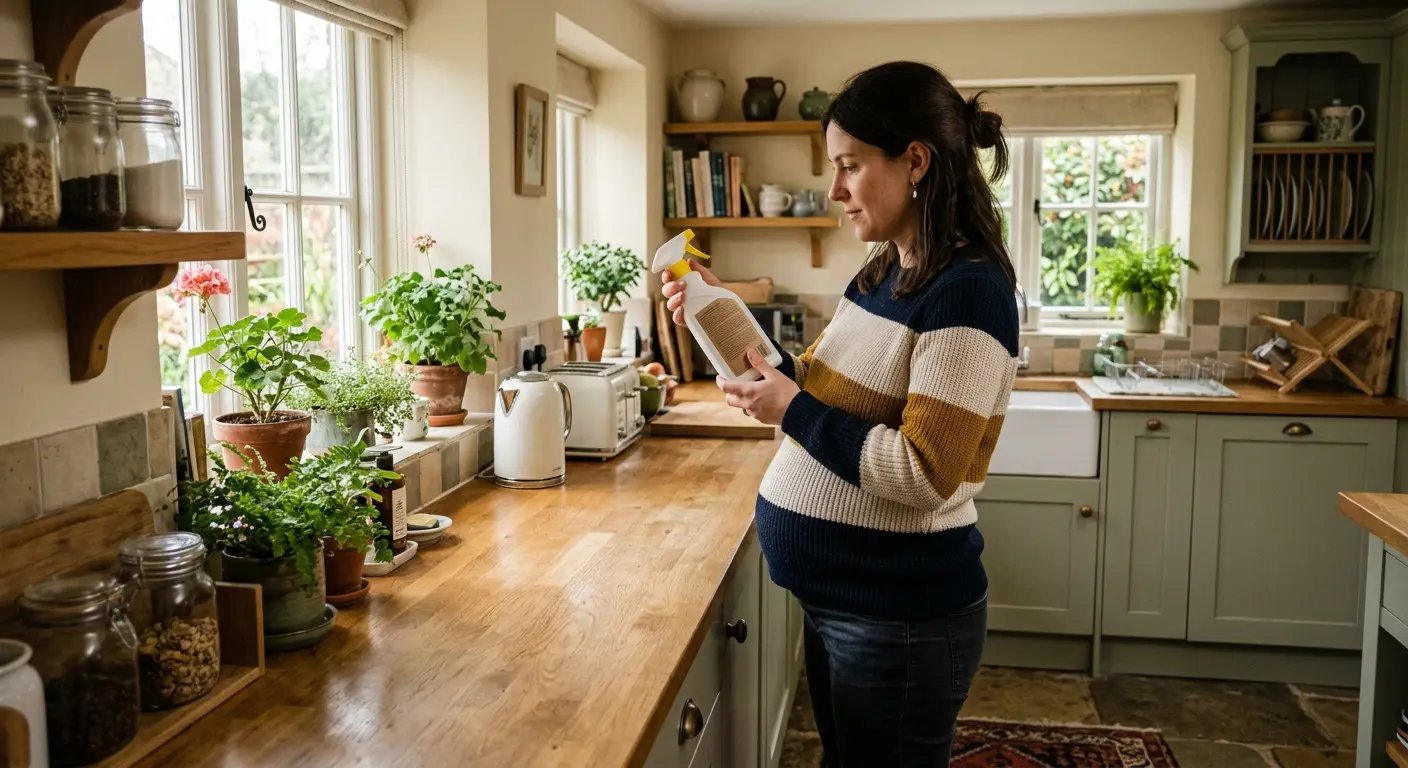
Most parents preparing for a new baby do the same thing.
They spend hours reading ingredient labels on baby wash. They research which nappy brand is least irritating. They buy fragrance-free baby wipes and feel, reasonably, like they've done their homework.
And that instinct is exactly right. Reading labels matters. Chemical awareness matters.
The problem is that the products in the baby aisle are not the ones your baby is most exposed to.
The things that have the greatest impact on what your baby actually breathes and absorbs every day are the ordinary household products you've been using for years without a second thought. The spray you use to clean surfaces. The air freshener in the hallway. The detergent you wash their sleepsuits in. These aren't products marketed at babies, so most parents never think to scrutinise them.
And most of them exploit something most people don't know exists: the fragrance loophole.
UK law allows manufacturers to list hundreds of individual chemical compounds under a single word on the label: "fragrance." There is no requirement to disclose what those compounds actually are. Which means a plug-in air freshener, a supermarket cleaning spray, or a fabric softener can contain dozens of chemicals linked to hormone disruption, and the label will simply say "fragrance." Your baby is breathing and absorbing these compounds every day, and you have no way of knowing what they are.
Here are the five swaps that actually move the needle, ranked by what the evidence says matters most.
 The 5 Swaps
 Swap 1
Your Air Fresheners, Aerosol Sprays, and Scented Candles
The one with the strongest evidence, and the one most parents overlook entirely
This is where the research is most consistent, and most surprising.
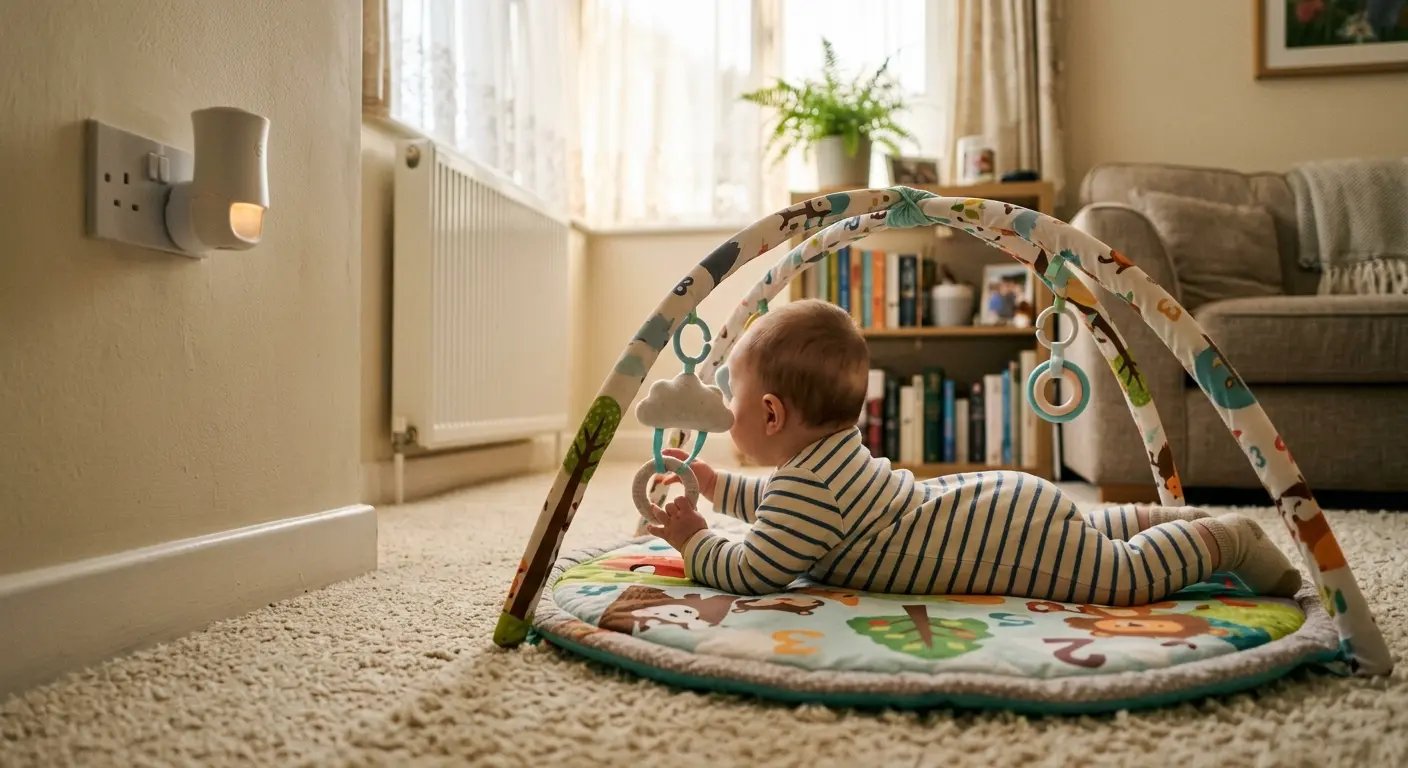
When UK researchers looked at over 10,000 families, they found that daily use of air fresheners and aerosol sprays was linked to a 32% increase in infant diarrhoea, significantly higher rates of earache, and a meaningful increase in persistent wheeze by age two. Separate research following over 2,000 families found that children in homes with heavy cleaning product use were more than twice as likely to develop asthma by age three.
It's not an allergy thing. It's that the chemical compounds hidden behind the fragrance loophole irritate your baby's respiratory system and gut lining directly. In a sealed modern home, these compounds build up. And because babies breathe roughly twice as much air relative to their body weight as adults do, and spend almost all their time indoors, the exposure adds up fast.
A plug-in air freshener, a paraffin candle, a supermarket cleaning spray, a fabric softener that keeps clothes smelling fresh for three days: all of these are releasing undisclosed compounds into the air your baby breathes around the clock. Because of the fragrance loophole, most parents have no idea what those compounds actually are.
The distinction that matters here is not fragrance versus no fragrance. It's disclosed, tested fragrance versus undisclosed, untested fragrance. Products that list every individual compound and formulate each one to be safe for hormones and skin are a completely different category from mainstream scented products, even when they smell just as good.
 What we'd recommend
The highest-impact change is the simplest: stop using synthetic air fresheners entirely. Plug-ins, aerosol sprays, wax melts, paraffin candles. These are the products most consistently linked to indoor air quality problems in homes with young children. Ventilation is free and works.
For cleaning sprays, the issue isn't that you clean surfaces — it's what you clean them with. Most mainstream sprays contain compounds hidden behind the fragrance loophole that stay on surfaces and get into the air during use. Switching to a spray that publishes every single ingredient removes that unknown quantity entirely.
Dip Multi-Surface Cleaning Sheets
Publishes every fragrance compound individually. Each one formulated to be hormone-safe. Our most transparent option tested.
~£3.75 per bottle equivalent

Purdy & Figg Counter Clean
Started by a nurse and a horticulturalist. Plant-derived, free from disinfectant chemicals, beautifully scented.
£6.80/bottle on subscription
For candles, move to soy or beeswax. Neom Organics uses natural fragrance and is one of the few mainstream options genuinely worth recommending here.
If indoor air quality is a real concern, particularly if you're in a city or near a busy road, the Levoit Core 300S is the nursery air purifier we'd point parents toward. True HEPA filtration, quiet enough for a sleeping baby, and compact enough for a small room.
 Swap 2
Your Laundry Detergent
Not for the reasons you've been told but still worth doing
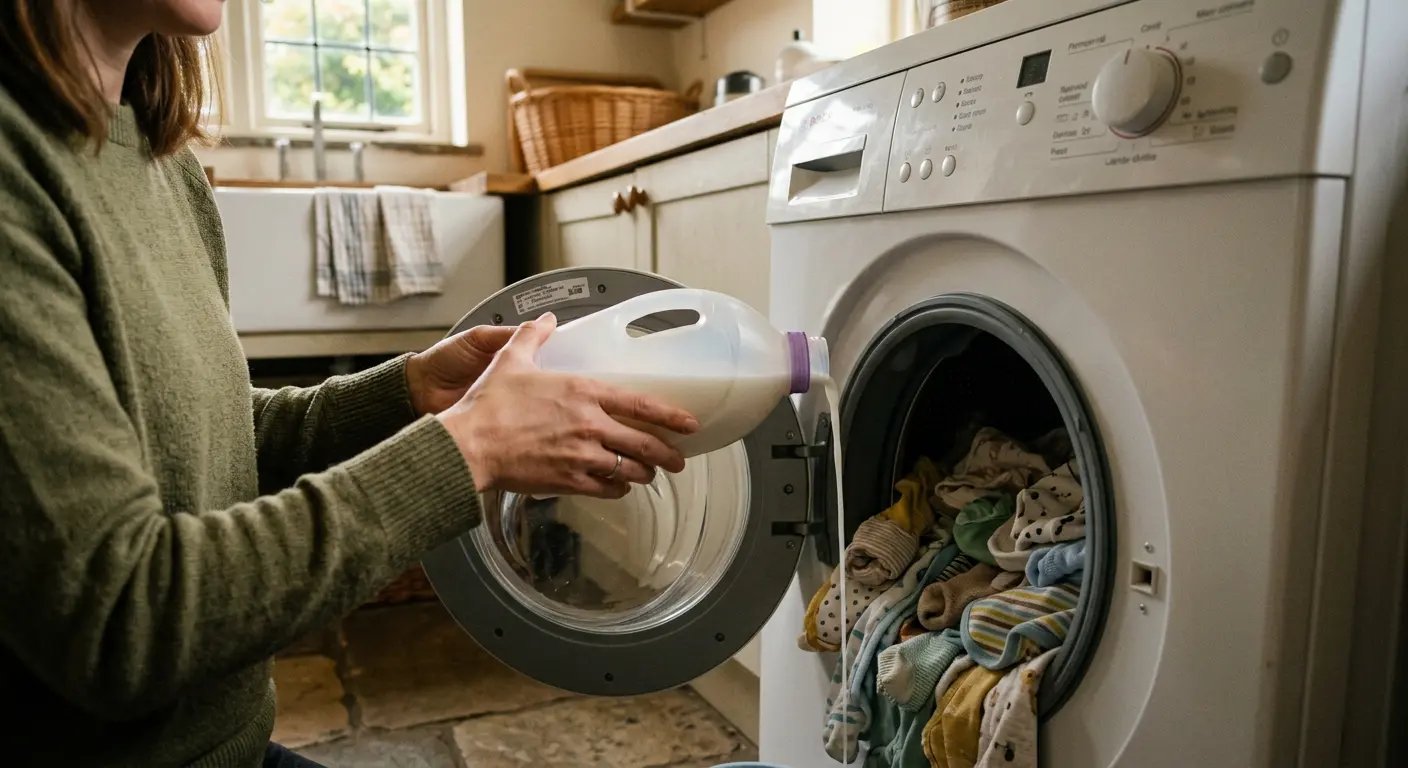
The honest truth about laundry detergents is more nuanced than most parenting content lets on.
Most parents switch to non-bio when they have a baby because they've always been told it's gentler. Researchers actually looked into this properly, reviewing over 40 individual studies, and found that the enzymes in bio detergents are not responsible for skin reactions. At all. The "non-bio is safer for babies" thing is essentially a UK marketing story that doesn't exist anywhere else in the world, and skin problems are no more common in countries that only use bio.
So what is the actual concern with laundry detergents? Fragrance. Thanks to the fragrance loophole, the compounds that keep your clothes smelling fresh three days after washing don't have to be individually listed. Those compounds are designed to cling to fabric fibres, which means they're in contact with your baby's skin all day. And infant skin is more permeable than adult skin for the first several months of life, meaning more of what sits on the surface gets through.
Optical brighteners are worth knowing about too. These are the fluorescent compounds that make whites look whiter, and they do transfer from fabric to skin. The research on how much actually gets absorbed through healthy infant skin is limited, but they're a meaningful thing to avoid if you're making a switch anyway.
What we'd recommend
You're looking for a detergent with no fragrance allergens, or one that uses only fully disclosed, hormone-safe fragrance compounds, and no optical brighteners.
Dip Laundry Sheets
No optical brighteners. Unscented or fully disclosed hormone-safe fragrance. Over 60,000 UK families use them.
30–40p per wash on subscription
If you'd rather grab something in a supermarket, Surcare is Allergy UK approved, dermatologically tested, and fragrance-free. Ecover Zero is another solid option — fragrance-free and free from optical brighteners, widely available.
 Swap 3
Your Baby's Sleeping Environment
Sixteen to eighteen hours a day in close contact with off-gassing materials — and most parents never think to check
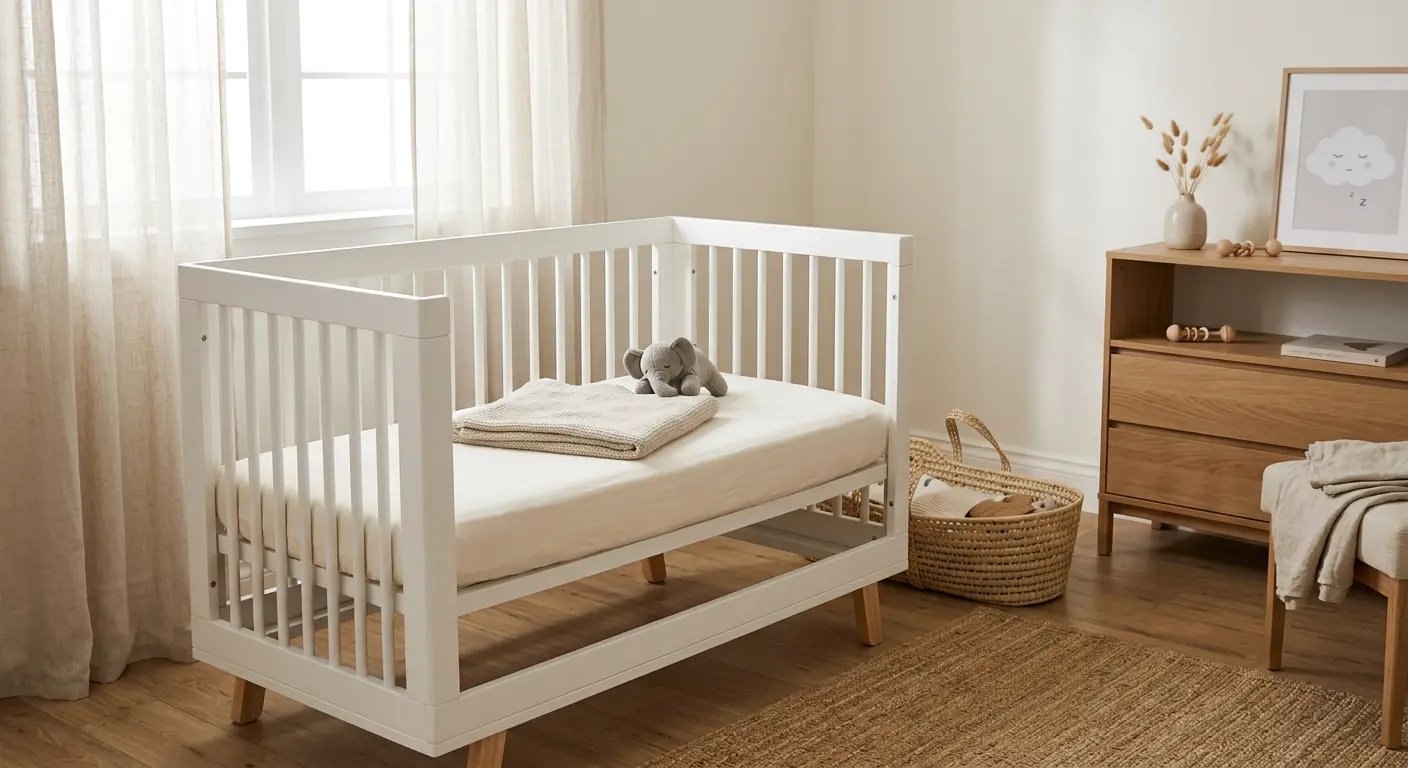
This is the swap that surprised us most.
Researchers tested 20 cot mattresses and found every single one was releasing chemicals into the air, with levels rising the warmer the mattress got. Which means the closer your baby's face is to the surface while they sleep, the higher the exposure. Separate research measuring the air inside children's bedrooms found worrying levels of phthalates, flame retardants, and UV filters, with some mattresses failing safety standards for specific chemicals entirely.
It doesn't stop at the mattress. Children in homes with PVC or vinyl flooring had levels of a common chemical linked to hormone disruption in their urine at 15 times the concentration of children in homes without it. That chemical accumulates in household dust, and babies — who are on the floor and putting things in their mouths — are the ones most exposed to it.
 UK Regulatory Change — October 2025
Cot mattresses, changing mats, and high chairs are now exempt from the rules that previously required chemical flame retardant treatments. The government's reasoning was straightforward: the chemical exposure risk from treating these products had come to outweigh the fire risk for items unlikely to ever encounter an ignition source.
What we'd recommend
Let new cot mattresses air properly before use, ideally in a ventilated room for at least two weeks. Avoid mattresses with PVC or vinyl waterproof covers where possible, as vinyl is the main source of phthalate off-gassing.
If there's vinyl flooring in the nursery, wet mopping is significantly better than dry vacuuming, which just kicks the dust back up into the air rather than actually removing it.
Finish any nursery decorating at least eight weeks before the baby's in the room, with windows open throughout. Research found that freshly painted rooms had concentrations of certain compounds up to 63% higher than normal, linked to increased rates of asthma, eczema, and rhinitis in children.
If you want an air purifier for the nursery, the Levoit Core 300S handles particles and off-gassing chemicals effectively and is quiet enough for a sleeping baby.
 Swap 4
Your Washing Up Liquid or Dishwasher Tablets
An emerging area of research — with an important caveat about what the evidence actually says
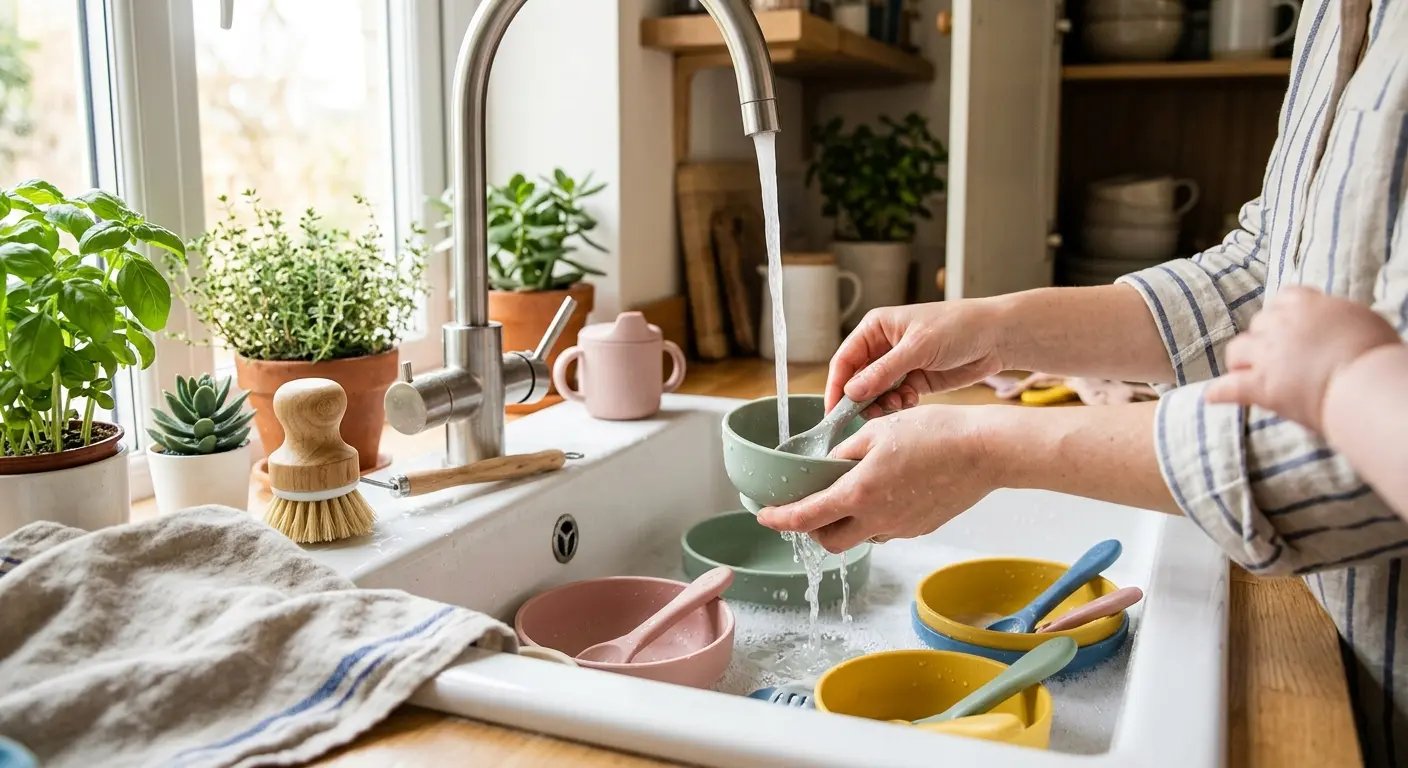
You may have seen coverage of a study finding that dishwasher products can damage the gut lining. It was peer-reviewed, it was widely shared, and the underlying concern is legitimate.
But it's worth knowing what it actually found. The damage was almost entirely down to the industrial-grade dishwashers used in restaurants, school canteens, and hospitals, which run on short cycles with no fresh-water rinse at the end. When the same researchers tested cups washed in a normal home dishwasher, they found no detectable detergent residue at all.
The jump from "commercial catering equipment damages gut cells" to "your home dishwasher is harming your baby" isn't supported by what the study actually showed.
That said, for weaning babies eating from hand-washed bowls and spoons, what you wash up with and how well you rinse does still matter.
What we'd recommend
For hand-washed feeding equipment, a thorough rinse under running water is the main thing.
Dip Dish Sheets
Plant-based surfactants designed to rinse away completely under normal tap pressure. Pre-measured so you can't accidentally use too much.
Bio-D Washing Up Liquid is a good supermarket option — UK-made and free from petrochemicals.
For the dishwasher, normal home use with a standard rinse cycle appears to leave no detectable residue, so this is a lower priority than the swaps above.
 Swap 5
Baby Skincare and Bath Products
The one most parents already tackle — and the market has genuinely improved
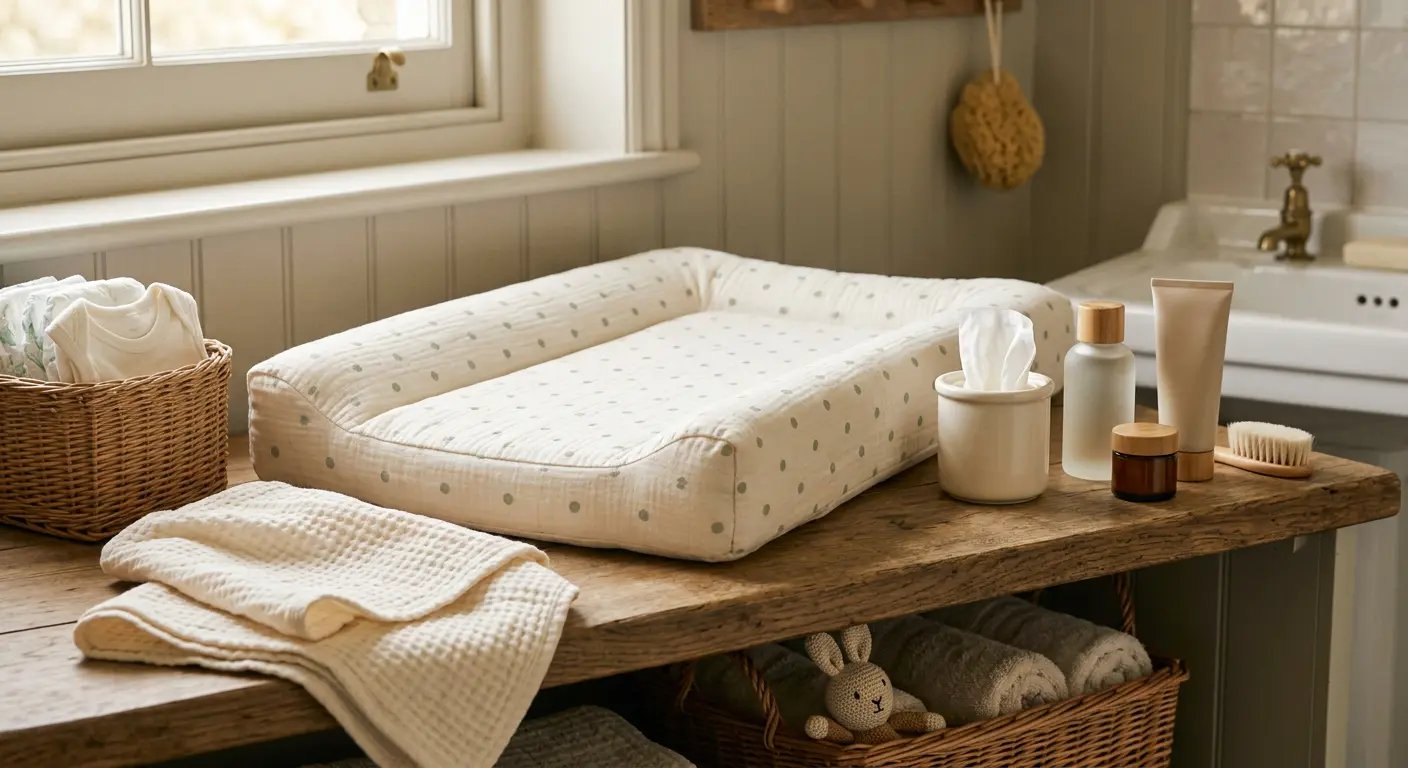
This is where most new parents start, and the good news is the baby skincare category has got a lot better over the past decade. The main things to avoid are still SLS, synthetic fragrance, and parabens — all common in mainstream baby wash and moisturisers.
Baby skin isn't just smaller adult skin. It's thinner, more permeable, and still developing its own protective barrier, which means more of what sits on the surface can get through. That changes after the first few months, but in the newborn period especially, what you put on it matters.
What we'd recommend
Green People Organic Babies is the UK benchmark for properly certified organic baby skincare. No SLS, no synthetic fragrance, no parabens, and actually certified rather than just self-declared natural. Their starter kit is a good way in.
Childs Farm is the more accessible option — in Boots and most supermarkets, dermatologically tested, and free from the main irritants. If you want something you can pick up locally, this is the one.
For nappies and wipes, Natracare and Bambo Nature are both free from chlorine bleaching, plastic linings, and synthetic fragrance.
 Where to Start
The Practical Reality
Reading this, most parents will feel the same thing: this is a lot to change at once.
It doesn't have to be. The swaps with the strongest evidence behind them are also the most practical to make. Stopping air freshener use costs nothing. Switching your cleaning spray is a single product. Airing a new mattress takes time but no money.
 Fastest Way to Start
Dip's Home Detox Bundle
Laundry sheets (30 washes), multi-surface spray with reusable glass bottle, and dishwasher sheets (60 cycles). Same formulation standard across all three. One order, three categories sorted.
Get the Bundle — £30
100% money-back guarantee. Free UK delivery.
Swaps 3 and 5 are worth making too. But if time and headspace are limited, the bundle gets the most important ground covered first.
 A Note on Timing
If you're doing this before birth, give yourself at least four to six weeks to wash all new baby items in the new detergent. Fragrance compounds from your old detergent can take several washes to fully clear from fabric fibres.
Most parents who sort this before the baby arrives say the same thing afterwards: they're glad they did it when they had the headspace to, rather than trying to figure it out with a newborn in the house.
It doesn't have to be complicated. It just has to be done.
Disclaimer: This article contains affiliate links. We may earn a commission if you purchase through our links, at no additional cost to you. Some sections of this article are sponsored. We only recommend products we have genuinely reviewed and believe meet the standards described. This is not a medical publication and does not constitute health advice. All health-related claims are based on peer-reviewed research cited in context.
